
ケビンのワインコード ラベルの先にあるもの Vol.3
文/ジョン・ケビン ウィラハン
夕食を食べるために訪れるレストランがある。そして、まるでひとつの物語に偶然迷い込んだような気持ちにさせる場所もある。
シェフ、浜本拓晃氏が率いる意欲的なレストラン・プロジェクト、Cambio Corsaは、後者に属する。来年正式にオープンする予定だが、すでに一連の親密なイベントを通して、その個性の一端を見せ始めている。そこには、日本の職人技、海外からの影響、そして世界の思いがけない場所から届く食材が集められている。
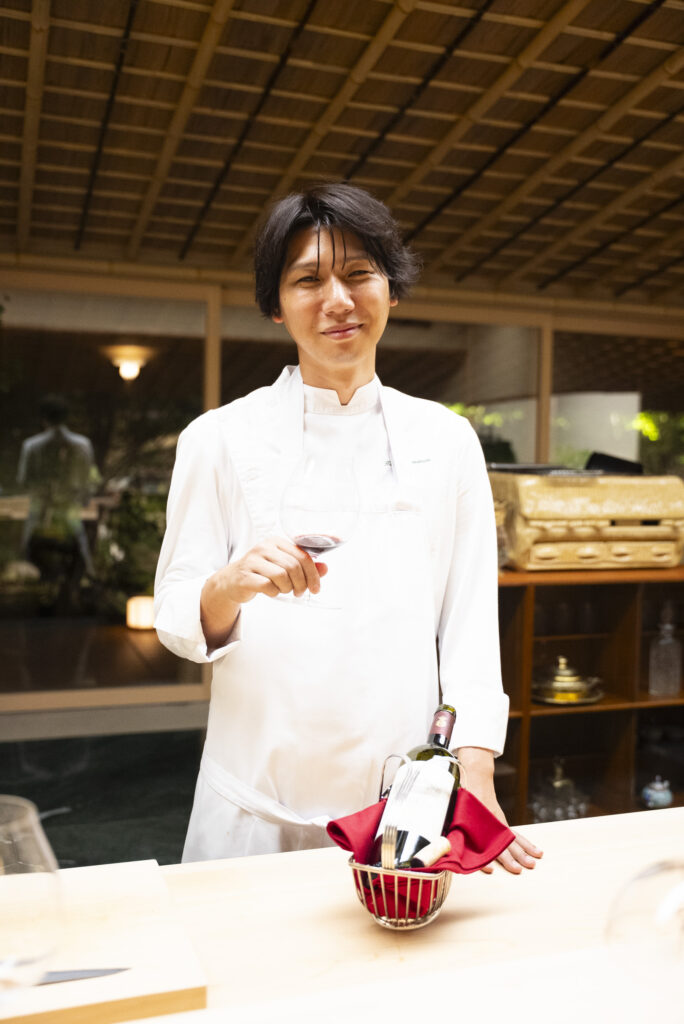
浜本拓晃シェフ ©Yuji Komatsu
Cambio Corsaという名前は、イタリア語からおおよそ「ギアチェンジ」と訳すことができ、これはHiroのアプローチを的確に表している。彼の野心は皿の上だけにとどまらない。料理は、人々、文化、そしてアイデアをつなぐ方法となる。
私は、日本と深く結びついているものの、何千キロも離れた場所を原産地とする食材を中心に構成されたプライベートディナーで、その哲学を体験した。
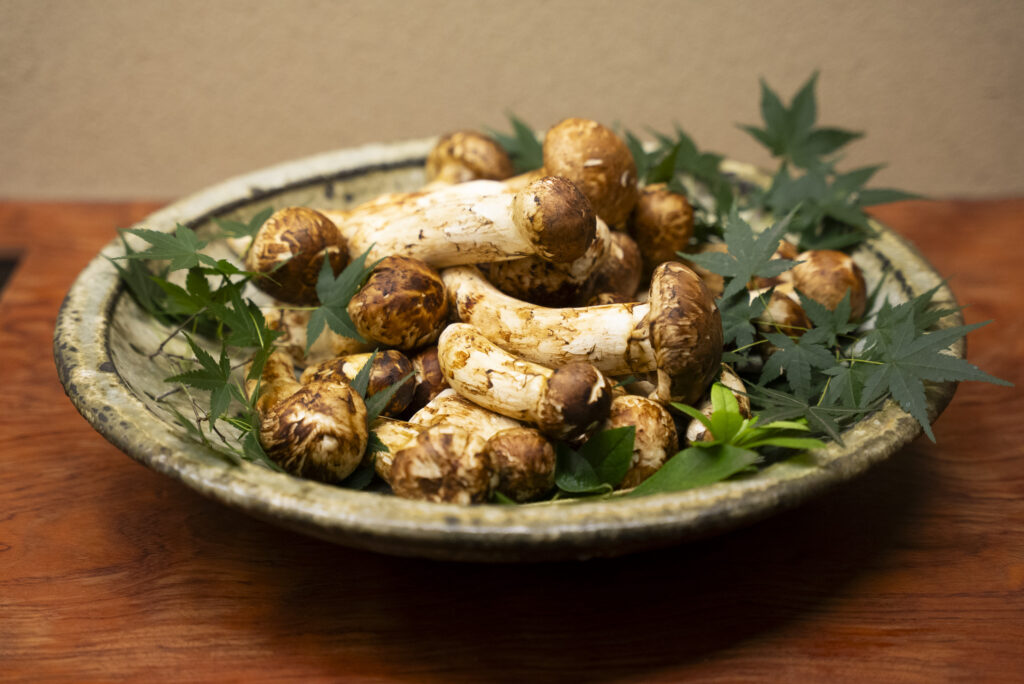
食材は、ブータンから空輸された松茸であった。
ヒマラヤの松茸
©Yuji Komatsu
ブータンには天然松茸を採取する長い歴史があり、ゲネカやウラを含む地域は松茸で知られている。そのため、すでに日本の食文化に深く根付いているこの食材にとって、日本は自然な行き先となる。
ディナーで提供されたのは「Bhutan Premium 7 Golden Matsutake(金乃松茸)」。ブータンの高地の森、そびえ立つタクツァン僧院からそれほど遠くない場所で採取されたものだ。出荷前には、香り、鮮度、外観、硬さなどの要素について評価され、その後、日本へ航空輸送された。
テーブルでは、日本の松茸との類似性がすぐに明らかになった。しかし、この体験は単にブータンの松茸と日本の松茸を比較することだけが目的ではなかった。Hiroはこの食材を出発点として、香り、食感、旨味を軸としたメニューを構築した。
コースを通して、料理は繰り返し、松茸の香りをマスクするのではなく、その香りへと立ち返っていた。
ひとつの松茸、いくつもの表現
©mami
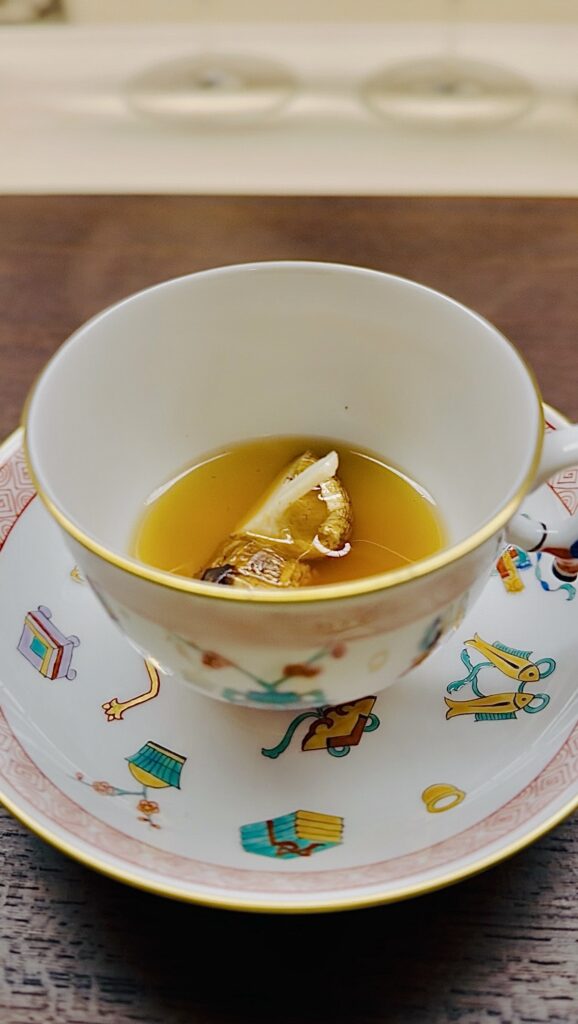
松茸のコンソメは、この食材を最も明確に表現した料理のひとつだった。
温かく透明感のあるスープから、松茸の香りがボウルから上へと立ち上がる。その旨味の深さは、香りを圧倒することなく支え、松茸の森を思わせる個性を料理の中心に保っていた。
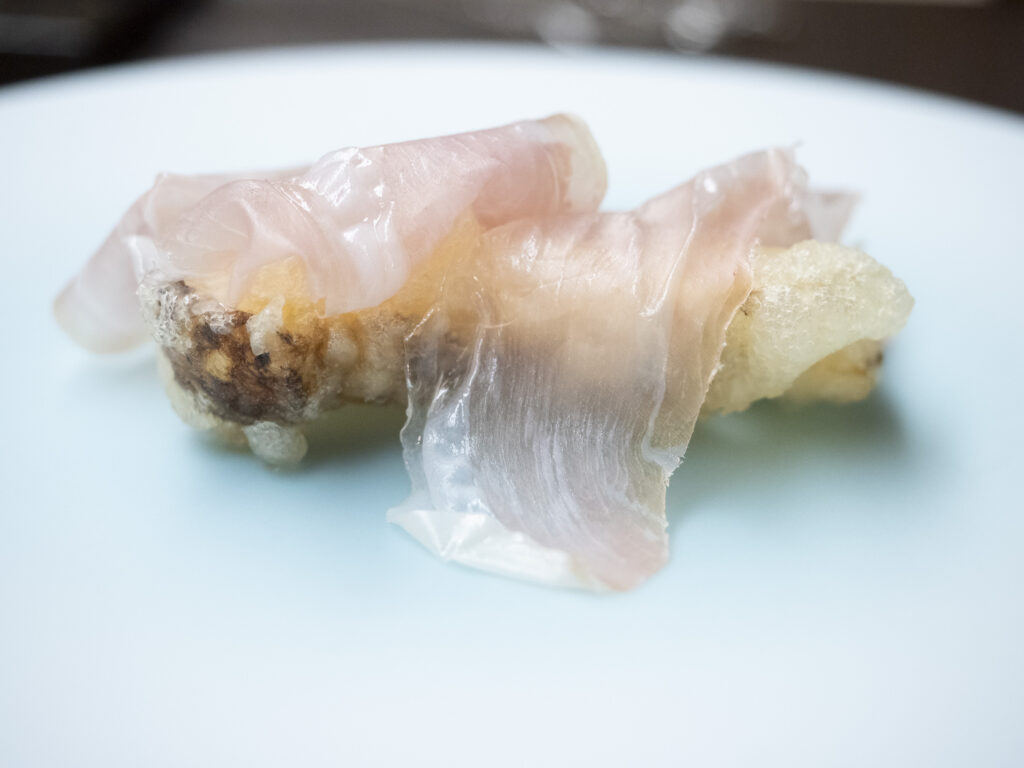
全く異なる表現は、生ハムとともに供された松茸のフリッターだった。
ここでは、食感がより大きな役割を果たした。ベニエ生地で作られたフリッターは、驚くほど軽く、空気を含んだふわふわとした食感で、柔らかな松茸を引き立てていた。一方、生ハムの塩味と脂が、重みと旨味をもたらした。松茸は、その香りがはっきりと残っている限り、よりリッチな食材とも合わせることができるだけの十分な旨味を持っており、この組み合わせは、そのバランスを特によく示していた。
©Yuji Komatsu
同様のペアリングを考える読者にとって、この原則は覚えておく価値がある。松茸は、塩味、脂、または旨味をもたらす食材と美しく調和するが、過度な甘味、強いスパイス、あるいは香りの強いソースは、簡単に松茸の個性を覆い隠してしまう。
ヒマラヤのキノコに合わせるイタリアの赤ワイン
ワインによって、ディナーはまた別の方向へと進んだ。
ペアリングされたのは、2017 Ornellaia Bolgheri DOC Superiore。トスカーナ州ボルゲリ地方で造られ、フレスコバルディ家が所有するワインだ。イタリアを代表する「スーパータスカン」のひとつとしてしばしば分類されるこのワインは、ボルドーに着想を得たブレンドで、カベルネ・ソーヴィニヨン56%、メルロー25%、プティ・ヴェルド10%、カベルネ・フラン9%からなる。
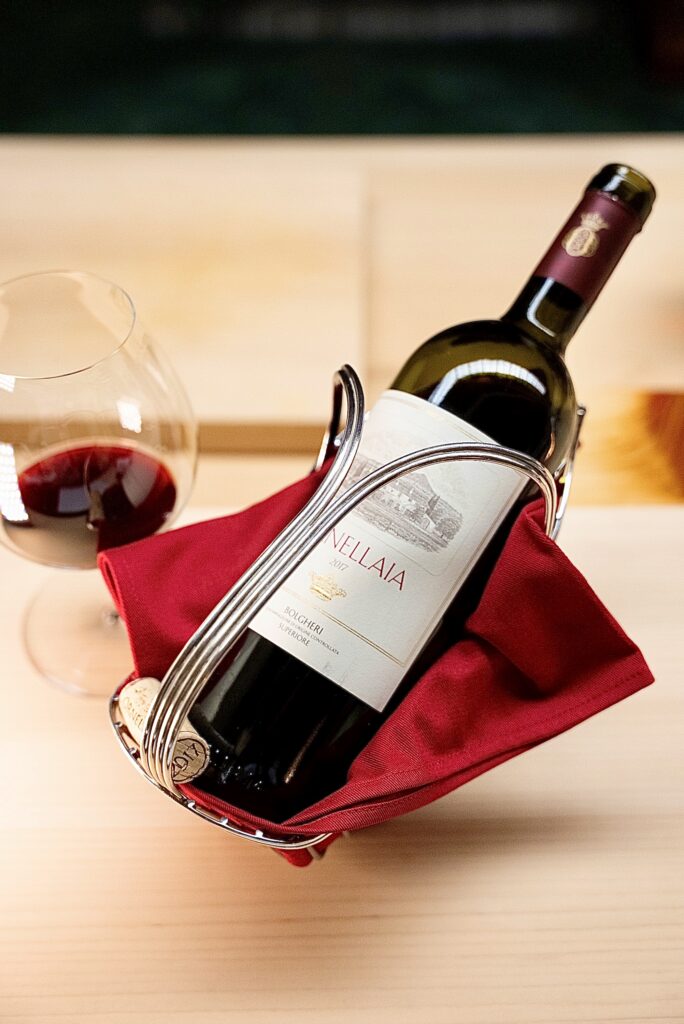
©Yuji Komatsu
香り高いキノコに合わせるワインとして、カベルネ主体の赤ワインを最初に選ぶ人は多くないだろう。ピノ・ノワール、ネッビオーロ、あるいは熟成した赤のブルゴーニュのほうが、より予測しやすい選択に思えるかもしれない。
しかし、よりリッチな調理法には、オルネッライアが理にかなっていた。
私たちが味わった2017年は、若々しいプライマリーフルーツの特徴を通過していた。濃いベリーとブラックカラントに、シダー、タバコ、リコリス、スパイスが加わっていた。口中では凝縮感があり、フルボディでありながら、タンニンは明らかに柔らかくなっていた。これは、より融和したテクスチャーをワインに与えると同時に、ワイン自身、料理と合わせるのに、十分な骨格を保っていた。
特に重要だったのは、その酸だった。ワインの凝縮した果実味と熟成による旨味のある風味が重く感じられるのを防ぎ、フレッシュさが口中でワインを動かし続けた。
松茸のフリッターと生ハムでは、その相互作用が特に説得力を持っていた。生ハムの塩味と脂がタンニンの印象を和らげる一方で、ワインのシダー、タバコ、リコリスのニュアンスが、松茸の土や森を思わせる香りと親和性を見せた。
コンソメは、より繊細な課題を提示した。コンソメと松茸を一緒に味わうことで、マリアージュは最もよく機能し、スープの旨味の深さが、ワインのより熟成した風味への橋渡しとなった。
これは、キノコとのペアリングには必ずしも軽いボディの赤ワインが必要ではないという、ありがたい再認識となった。ある程度の瓶熟成を経たカベルネ主体のワインは、料理に十分な旨味の深さがあり、タンニンが柔らかくなり始めていれば、うまく機能する。
日本の職人技と国際的な視点が出会う
Cambio Corsaにおける文化的なつながりは、食材だけにとどまらない。
イタリアという要素はレストランの名前から始まり、この日のメニューではブータンへと視線を向けている一方で、季節性、産地、品質に対する日本人の感謝の念を失っていない。
異なる料理文化を単純に組み合わせるのではなく、Cambio Corsaは、海外からの食材やアイデアを、明確に日本的な文脈の中へ持ち込むための出会いの場をつくっている。
それはディナーを通して明らかだった。ブータンで採取された天然の松茸が日本へと運ばれ、浜本シェフ自身の料理と感性によって解釈された。その隣には、トスカーナの海岸で造られた、熟成したボルドーに着想を得たワインがあり、すでに国際的な食卓に更にもう一つの層を加えていた。
そのコネクションは珍しいものだが、ひとつの物語に無理やり押し込められているようには決して感じられない。
それらはただ自然にひとつになり、食事をする人が、料理、ワイン、そしてその背後にある職人技を通して、その物語を体験できるようになっている。
それらは、味わうためにそこにある。
ひとつの食材を超えて
このディナーを印象深いものにしたのは、東京でブータン産の松茸を食べたという珍しさだけではなかった。
それは、食事の中に一つの旅が込められていたことだった。
ブータンの森から来たキノコ、日本人の料理に対する感性、そして熟成したトスカーナの赤ワイン。一見すると、共通点がほとんどないように思える。しかし食卓では、それぞれが自らのアイデンティティを保ちながら、全体に何かを加えていた。
それこそが、これから姿を現していくCambio Corsaの哲学の中で、最も興味深い側面なのかもしれない。その名前が示す「ギアシフト」は、単に料理の方向を変えることではない。それは視点を変え、慣れ親しんだ境界の外へ目を向け、異なる場所から来た食材、職人技、アイデアが、ひとつのカテゴリーに無理やり押し込められることなく出会うことを可能にすることなのだ。
世界と国際的につながっている東京という都市にとって、それはまったく自然なことに感じられる。
そしてこの特別な夜、旅は、ブータンの森で何千キロも離れた場所から採取された、一つのキノコから始まった。
At Cambio Corsa, Hiroaki Hamamoto Is Shifting Gears and Bringing the Himalayas to the Table
Kevin’s Wine Code Beyond the label Vol.02
text by John Kevin Whelehan
There are restaurants you visit for dinner, and then there are places that make you feel you have stumbled upon a story.
Cambio Corsa, the ambitious restaurant project led by chef Hiroaki Hamamoto, belongs to the latter category. Scheduled to officially open next year, the restaurant is already revealing something of its personality through a series of intimate events that bring together Japanese craftsmanship, international influences and ingredients from unexpected corners of the world.
chef Hiroaki Hamamoto ©Yuji Komatsu
The name Cambio Corsa translates roughly from Italian as “gear shift,” an apt description of Hiro’s approach. His ambition extends beyond the plate. Food becomes a way of connecting people, cultures and ideas.
I experienced that philosophy at a private dinner built around an ingredient deeply associated with Japan but originating thousands of kilometres away.
Matsutake from Bhutan.
©Yuji Komatsu
Himalayan Matsutake
Bhutan has a long history of harvesting wild matsutake, with areas including Genekha and Ura known for the mushroom. This makes Japan a natural destination for an ingredient already deeply embedded in Japanese culinary culture.
The mushrooms served at the dinner were Bhutan Premium 7 Golden Matsutake, harvested in the high-altitude forests of Bhutan, not far from the towering Taktsang Monastery. Before shipment, they were assessed for factors including aroma, freshness, appearance and firmness before being air-freighted to Japan.
At the table, the connection to Japan’s deep rooted matsutake culture was immediately apparent, but the experience was not simply about comparing Bhutanese and Japanese mushrooms. Hiro used the ingredient as the starting point for a menu built around fragrance, texture and umami.
Across the courses, the cooking repeatedly returned to the mushroom’s aroma rather than attempting to mask it.
One Mushroom, Several Expressions
The matsutake consommé was among the clearest expressions of the ingredient.
Warm and transparent, the broth carried the mushroom’s perfume upward from the bowl. Its savoury depth supported the aroma without overwhelming it, allowing the matsutake’s woodland character to remain at the centre of the dish.
A very different expression came with a matsutake fritter served with raw ham.
©Yuji Komatsu
Here, texture played a larger role. Made with beignet dough, the fritter had a remarkably light, airy and fluffy texture that complemented the tender mushroom, while the salt and fat of the ham brought weight and savouriness. Matsutake has enough umami to work with richer ingredients when its fragrance remains distinct, and the combination demonstrated that balance particularly well.
For readers considering similar pairings, the principle is worth remembering: matsutake can work beautifully with ingredients that provide salt, fat or umami, but excessive sweetness, heavy spice or strongly aromatic sauces can easily obscure the mushroom’s character.
An Italian Red with a Himalayan Mushroom
The wine took the dinner in another direction.
©Yuji Komatsu
The pairing was the 2017 Ornellaia Bolgheri DOC Superiore, produced in Tuscany’s Bolgheri region and owned by the Frescobaldi family. Often grouped among Italy’s leading “Super Tuscans,” the wine is a Bordeaux-inspired blend of 56% Cabernet Sauvignon, 25% Merlot, 10% Petit Verdot and 9% Cabernet Franc.
A Cabernet-based red would not be the first choice many diners would make for a fragrant mushroom. Pinot Noir, Nebbiolo or a mature red Burgundy might seem more predictable.
Yet the Ornellaia made sense with the richer preparations.
The 2017 we tasted had moved beyond its youthful primary-fruit character. Dark berries and blackcurrant were joined by cedar, tobacco, liquorice and spice. The palate remained concentrated and full-bodied, but the tannins had softened noticeably, giving the wine a more integrated texture while retaining enough structure to work with the food.
Its acidity was particularly important. Rather than allowing the wine’s concentrated fruit and mature savoury notes to feel heavy, the freshness kept it moving across the palate.
With the matsutake fritter and raw ham, the interaction was especially convincing. The salt and fat of the ham softened the impression of tannin, while the wine’s cedar, tobacco and liquorice notes found an affinity with the mushroom’s earthy, woodland aromas.
The consommé presented a more delicate challenge. The pairing worked best when the consommé was tasted together with the mushroom, allowing the broth’s savoury depth to provide a bridge to the wine’s more developed flavours.
It was a useful reminder that mushroom pairings do not always require a light-bodied red. A Cabernet-based wine with some bottle age can work when the dish has sufficient savoury depth and the tannins have begun to soften.
Japanese Craftsmanship Meets an International Perspective
The cultural connection at Cambio Corsa extends beyond the ingredients.
The Italian reference begins with the restaurant’s name, while the menu looks outward to Bhutan on this occasion, without losing sight of the Japanese appreciation for seasonality, provenance, and quality.
Rather than simply combining different culinary traditions, Cambio Corsa creates a meeting point where ingredients and ideas from elsewhere can be brought into a distinctly Japanese context.
That was evident throughout the dinner. Wild matsutake harvested in Bhutan made their way to Japan, where Hiro interpreted them through his own cooking and sensibility. Alongside them was a mature Bordeaux-inspired wine from the Tuscan coast, adding another layer to an already international table.
The connections are unusual, but they never feel forced into a single narrative.
They simply come together naturally, leaving the diner to experience the story through the food, the wine, and the craftsmanship behind them.
They are there to be tasted
More Than an Ingredient
What made the dinner memorable was not simply the novelty of eating Bhutanese matsutake in Tokyo.
It was the journey contained within the meal.
A mushroom from the forests of Bhutan, a Japanese culinary sensibility, and a mature Tuscan red might seem to have little in common. Yet at the table, each retained its own identity while contributing something to the whole.
That may be the most intriguing aspect of Cambio Corsa’s emerging philosophy. The “gear shift” suggested by its name is not simply about changing culinary direction. It is about changing perspective, looking beyond familiar borders and allowing ingredients, craftsmanship and ideas from different places to meet without forcing them into a single category.
For a city as internationally connected as Tokyo, that feels entirely natural.
And on this particular evening, the journey began with a mushroom harvested thousands of kilometres away in the forests of Bhutan.